Learning Namaz is an important part of Islamic education for Muslims of all ages. For families living in the United States, Namaz Online USA classes provide a convenient way to learn and practice Namaz from home with qualified online teachers.
At Ahmed Online Quran Academy, we help children and adults learn Namaz step by step through one-to-one online classes. Our lessons are designed to make Islamic learning simple, clear, and convenient for students living in the USA.
What Is Namaz Online USA?
Namaz, also known as Salah, is the daily prayer performed by Muslims. Muslims perform five obligatory prayers each day: Fajr, Dhuhr, Asr, Maghrib, and Isha.
Learning the correct method of Namaz includes understanding the prayer times, positions, recitations, duas, and basic rules of Salah.
Learn Namaz Online USA
Our Namaz Online USA classes are designed for students who want to learn Namaz from the comfort of their homes. Online learning can be especially helpful for children and busy families who need flexible class timings.
Students can learn through live online lessons with a teacher and receive individual attention throughout the class.
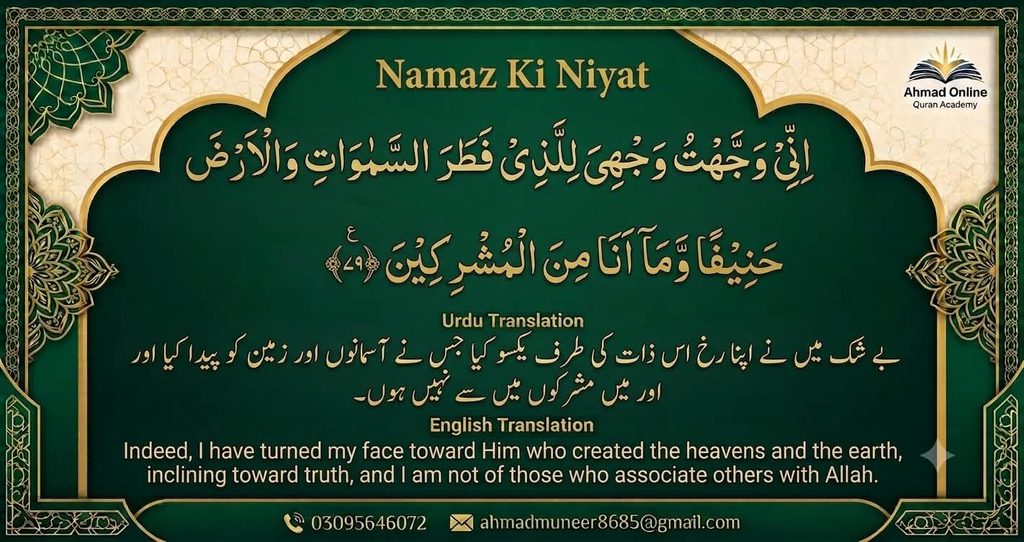
1. Niyyah — Intention for Namaz
Before starting Namaz, a Muslim should make a sincere Niyyah (intention) in the heart for the prayer they are about to perform. Niyyah means having a clear intention that you are offering the specific prayer for the sake of Allah.
For example, if you are going to offer Fajr, you should know in your heart that you are praying the Fajr prayer for Allah. The intention is an act of the heart, so it is not necessary to recite a specific sentence aloud.
Example:
“I intend to offer the Fajr prayer for the sake of Allah.”
2. Takbeer-e-Tahrimah — Beginning the Prayer
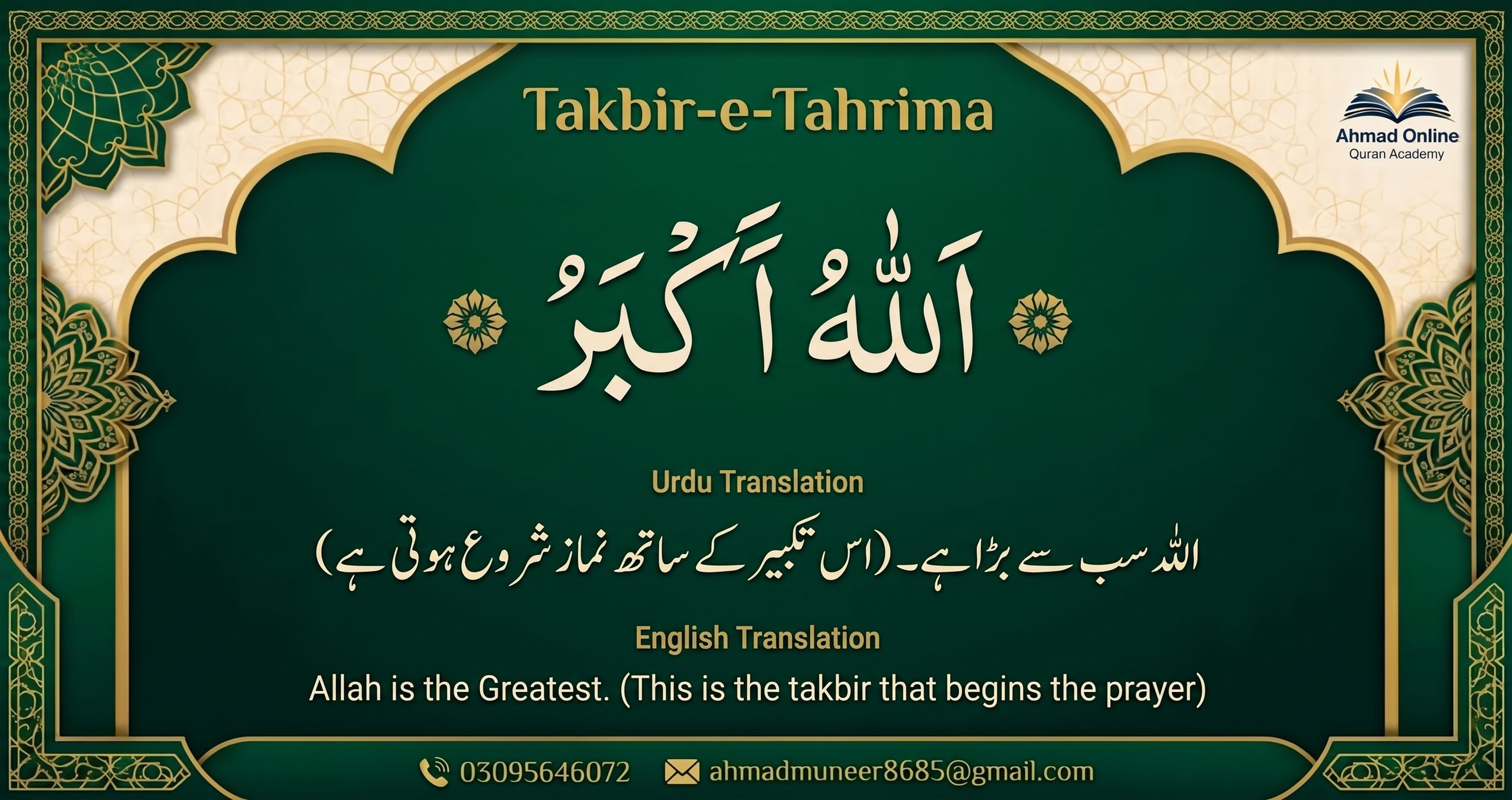
After making the intention, stand facing the Qiblah and begin the Namaz by saying “Allahu Akbar.” This opening Takbeer is called Takbeer-e-Tahrimah.
The words “Allahu Akbar” mean “Allah is the Greatest.” By saying Takbeer-e-Tahrimah, a person formally enters the prayer and leaves ordinary activities behind to focus on worshipping Allah.
While saying “Allahu Akbar,” the hands are raised according to the established method of Salah, and then the hands are placed in the appropriate position for prayer.
Arabic
اللَّهُ أَكْبَرُ
English Translation
“Allah is the Greatest.”
Takbeer-e-Tahrimah is an important beginning of Salah because it marks the point at which the worshipper enters the prayer and begins the prescribed recitations and movements of Namaz.
Sana — The Opening Supplication of Namaz
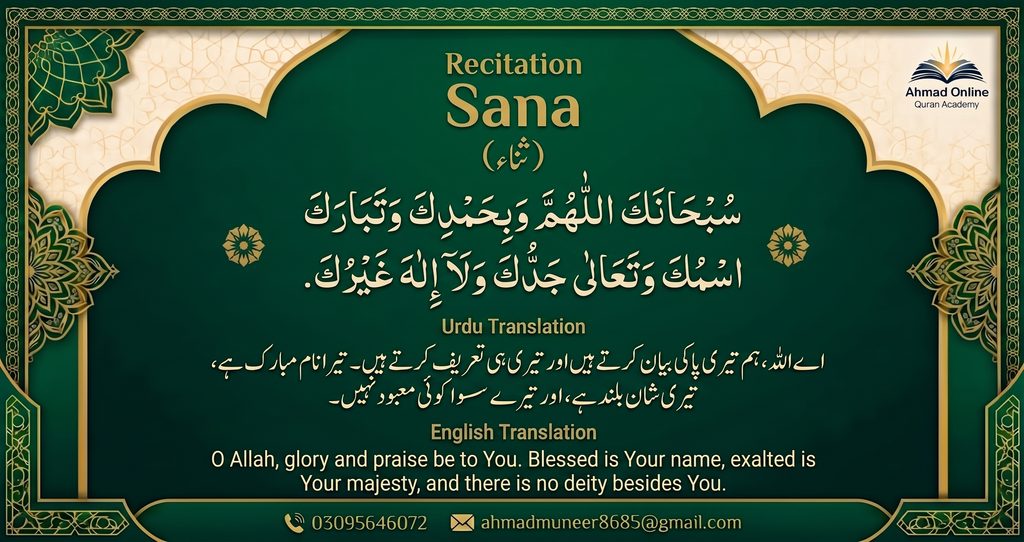
After saying Takbeer-e-Tahrimah (Allahu Akbar), the worshipper recites Sana, the opening supplication of Namaz. Sana is a beautiful dua in which we praise Allah, declare His perfection, and acknowledge His greatness.
Reciting Sana at the beginning of Salah helps the worshipper start the prayer with humility, praise, and devotion to Allah. Understanding its meaning is also helpful for children and beginners because they can learn what they are saying during Namaz.
Sana in Arabic
سُبْحَانَكَ اللَّهُمَّ وَبِحَمْدِكَ، وَتَبَارَكَ اسْمُكَ، وَتَعَالَىٰ جَدُّكَ، وَلَا إِلٰهَ غَيْرُكَ
English Translation
“Glory be to You, O Allah, and all praise is Yours. Blessed is Your Name, and exalted is Your Majesty, and there is no deity worthy of worship besides You.
4. Surah Al-Fatihah — The Opening Chapter of the Quran
After reciting Sana, the worshipper recites Ta’awwuz, followed by Tasmiyah, and then recites Surah Al-Fatihah. Surah Al-Fatihah is the opening chapter of the Holy Quran and has a central place in Salah.
Surah Al-Fatihah contains praise of Allah, recognition of His mercy and greatness, and a sincere request for guidance to the straight path. Learning Surah Al-Fatihah with its meaning helps Muslims understand the words they recite during every prayer.
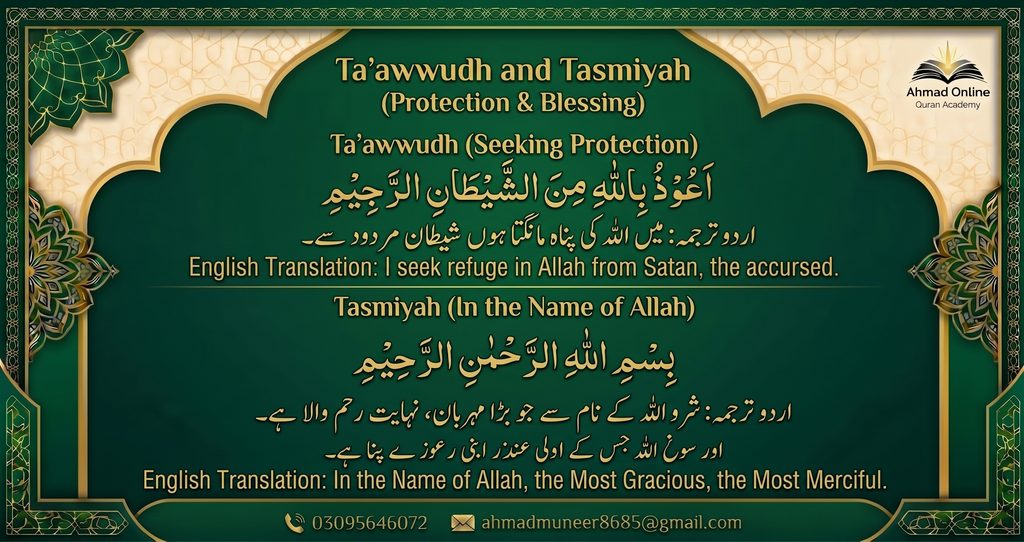
Ta’awwuz
Before beginning the Quranic recitation, the worshipper seeks Allah’s protection from Satan.
Arabic:
أَعُوذُ بِاللَّهِ مِنَ الشَّيْطَانِ الرَّجِيمِ
English Translation:
I seek refuge in God from the accursed Satan.
Tasmiyah — Bismillah
After Ta’awwuz, Tasmiyah is recited:
Arabic:
بِسْمِ ٱللَّهِ ٱلرَّحْمَٰنِ ٱلرَّحِيمِ
English Translation:
In the name of God, the Most Gracious, the Most Merciful
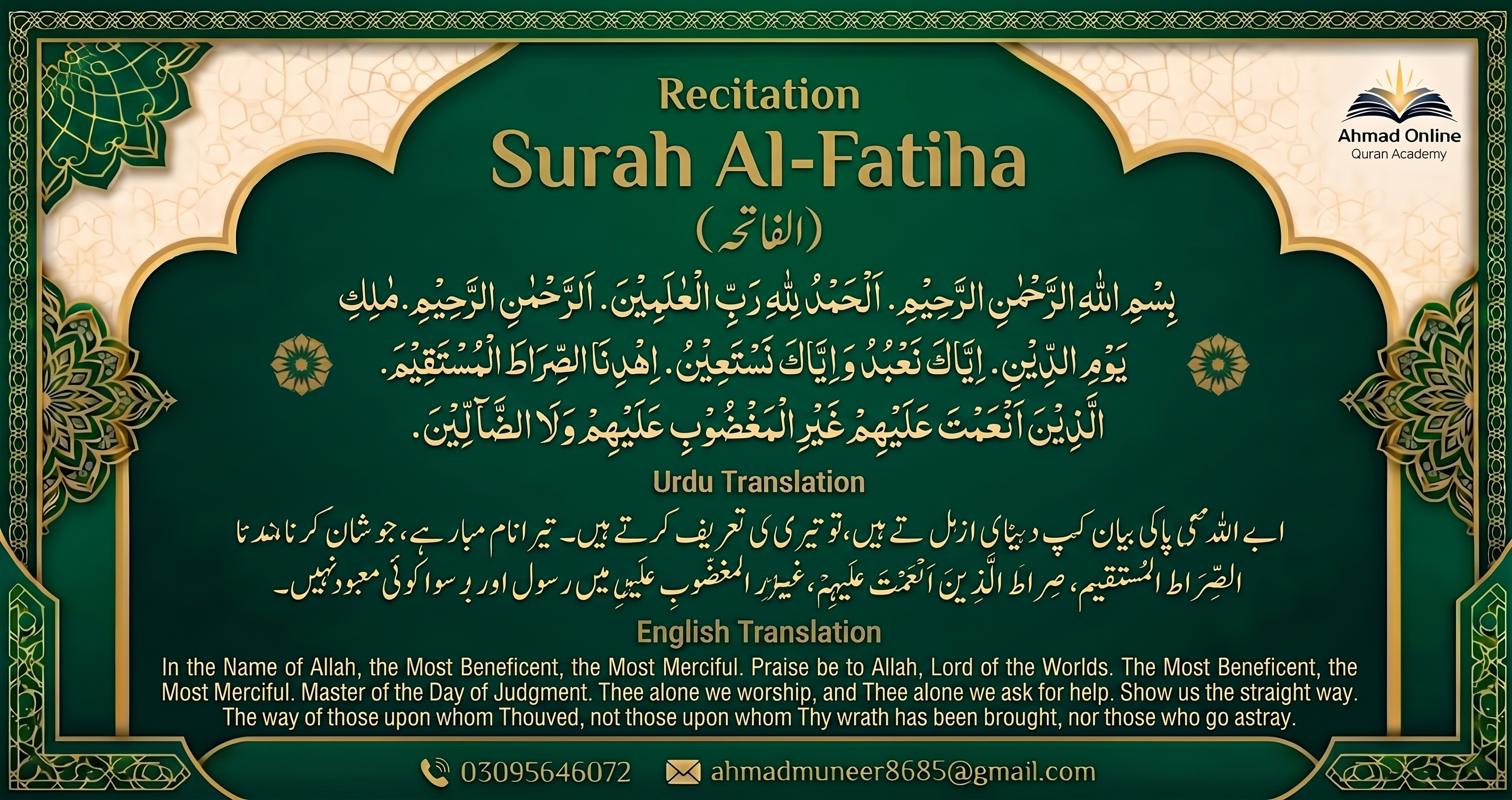
Surah Al-Fatihah
Surah Al-Fatihah is a short but deeply meaningful chapter of the Quran. It begins with praise for Allah, the Lord of all worlds, and reminds us of His mercy and authority. It also teaches us to ask Allah for guidance to the straight path.
For beginners and children learning Namaz Online USA, understanding the meaning of Surah Al-Fatihah can make Salah more meaningful and help them focus on what they are reciting.
Surah Al-Fatihah in Arabic
الْحَمْدُ لِلَّهِ رَبِّ الْعَالَمِينَ
الرَّحْمَٰنِ الرَّحِيمِ
مَالِكِ يَوْمِ الدِّينِ
إِيَّاكَ نَعْبُدُ وَإِيَّاكَ نَسْتَعِينُ
اهْدِنَا الصِّرَاطَ الْمُسْتَقِيمَ
صِرَاطَ الَّذِينَ أَنْعَمْتَ عَلَيْهِمْ غَيْرِ الْمَغْضُوبِ عَلَيْهِمْ وَلَا الضَّالِّينَ
5. Surah Al-Ikhlas — Qul Huwa Allahu Ahad
After reciting Surah Al-Fatihah, the worshipper may recite another Surah from the Quran. Surah Al-Ikhlas, also known as Qul Huwa Allahu Ahad, is one of the short and meaningful Surahs that is commonly taught to children and beginners learning Namaz.
Surah Al-Ikhlas teaches the fundamental belief in the Oneness of Allah (Tawheed). It explains that Allah is One, independent, and unique, and that nothing is comparable to Him. Learning this Surah with its meaning helps Muslims understand the core belief of Islam while reciting it during Salah.
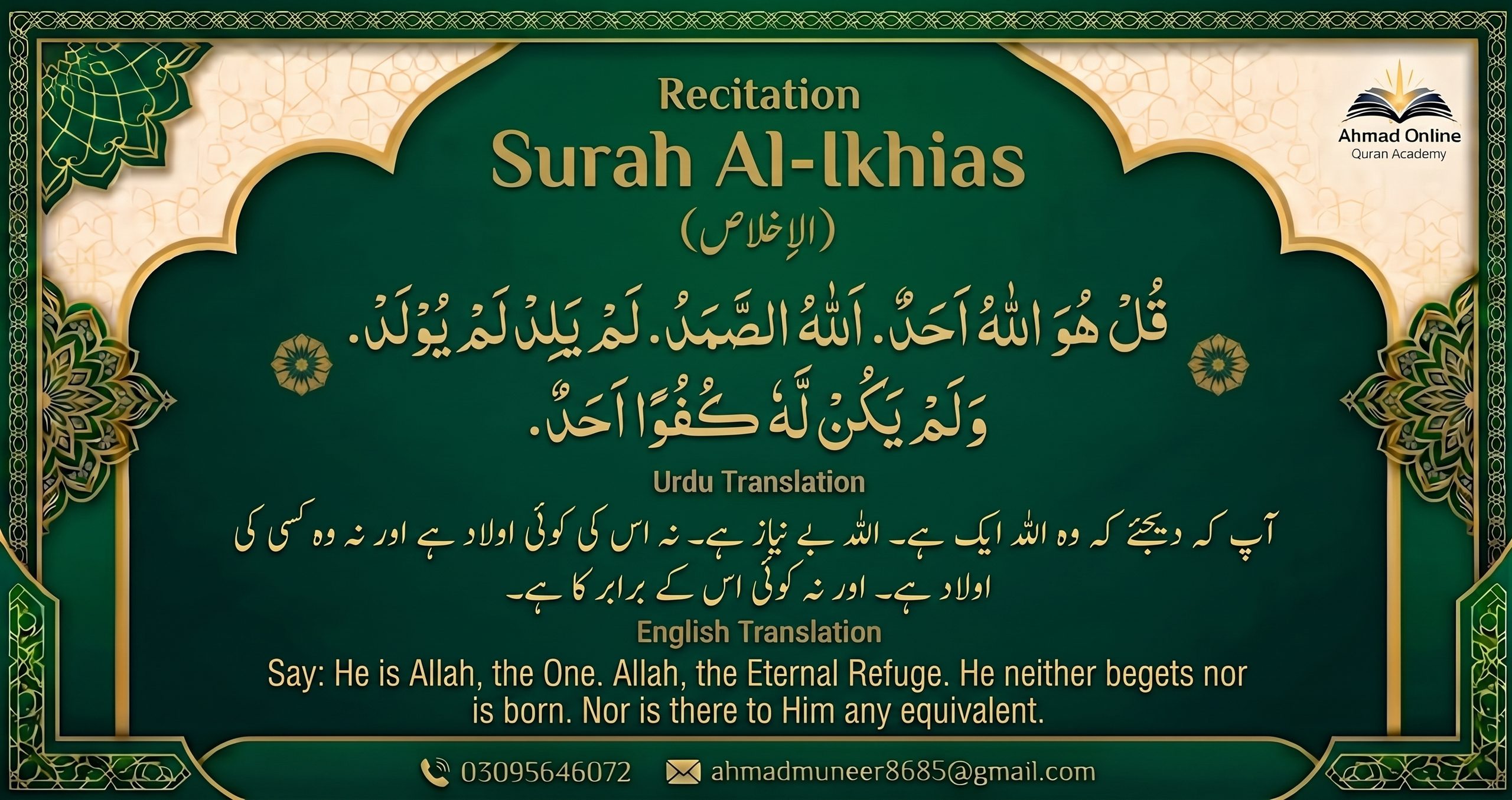
Surah Al-Ikhlas in Arabic
قُلْ هُوَ اللَّهُ أَحَدٌ اللَّهُ الصَّمَدُ لَمْ يَلِدْ وَلَمْ يُولَدْ وَلَمْ يَكُن لَّهُ كُفُوًا أَحَدٌ
English Translation
“Say, He is Allah, the One.
Allah, the Eternal Refuge.
He neither begets nor is born,
and there is none comparable to Him.”
Meaning and Importance of Surah Al-Ikhlas
Surah Al-Ikhlas is a powerful reminder of the Oneness and uniqueness of Allah. It teaches that Allah has no partner, no parent, and no child, and that nothing is equal or comparable to Him.
For children and beginners learning Namaz Online USA, understanding the meaning of Surah Al-Ikhlas can help them learn the Surah with greater understanding rather than memorizing the Arabic words alone.
6. Ruku — Bowing in Namaz Online USA
After completing Surah Al-Fatihah and the additional Surah while standing in Qiyam, the worshipper says “Allahu Akbar” and moves into Ruku, the bowing position of Salah.
Ruku is an important part of Namaz that shows humility, respect, and submission before Allah. In this position, the worshipper bows with the back appropriately straight and places both hands on the knees. The head and back are kept in a balanced position, and the worshipper focuses on glorifying Allah.
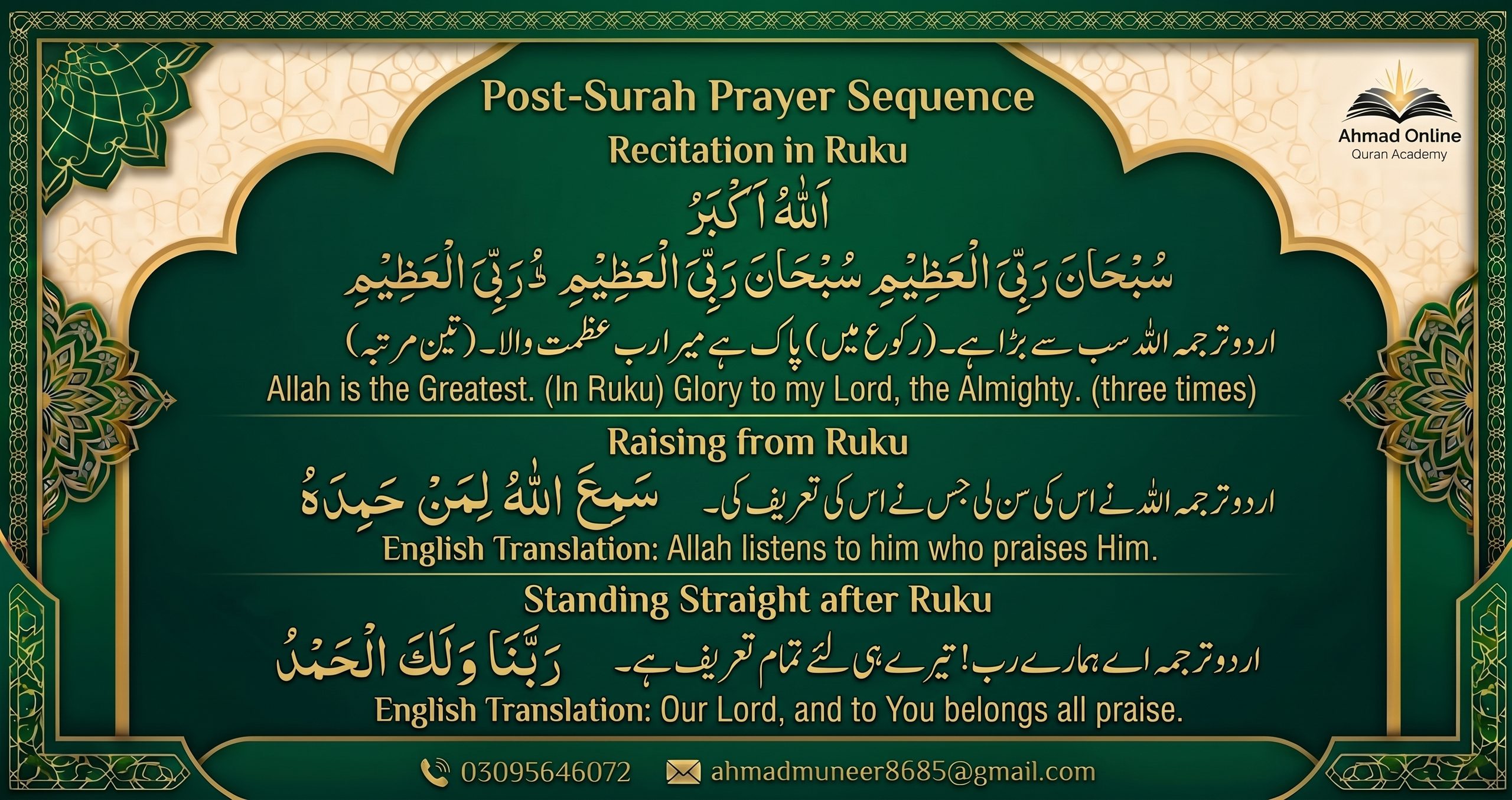
Dua Recited in Ruku
While in Ruku, the following Tasbeeh is recited:
سُبْحَانَ رَبِّيَ الْعَظِيمِ
English Translation
“Glory is to my Lord, the Most Great.”
This beautiful Tasbeeh reminds us of the greatness and majesty of Allah. By reciting it in Ruku, the worshipper praises Allah and acknowledges that He is greater than everything.
After completing the Ruku, the worshipper rises back to a standing position before going into Sujood. While rising, the following is recited:
سَمِعَ اللَّهُ لِمَنْ حَمِدَهُ
English Translation:
God hears those who praise Him.
After standing upright, the worshipper says:
رَبَّنَا لَكَ الْحَمْدُ
English Translation:
“Our Lord, praise be to You”
Ruku teaches Muslims humility and reminds us to submit ourselves sincerely to Allah during Salah.
7. Sujood — Prostration in Namaz Online USA
After rising from Ruku and standing upright, the worshipper says “Allahu Akbar” and moves into Sujood (prostration). Sujood is one of the most meaningful positions in Salah because it represents humility, submission, and devotion to Allah.
During Sujood, the worshipper places the forehead and nose, both hands, knees, and toes appropriately on the ground. While in this position, the following Tasbeeh is recited:
Dua in Sujood
سُبْحَانَ رَبِّيَ الْأَعْلَى
English Translation
Glory be to my Lord, the Most High
This Tasbeeh reminds us of Allah’s greatness and teaches us to humble ourselves before Him. Sujood is an important part of Namaz where a Muslim expresses complete submission and worship to Allah.
After the first Sujood, the worshipper sits briefly and then performs the second Sujood.
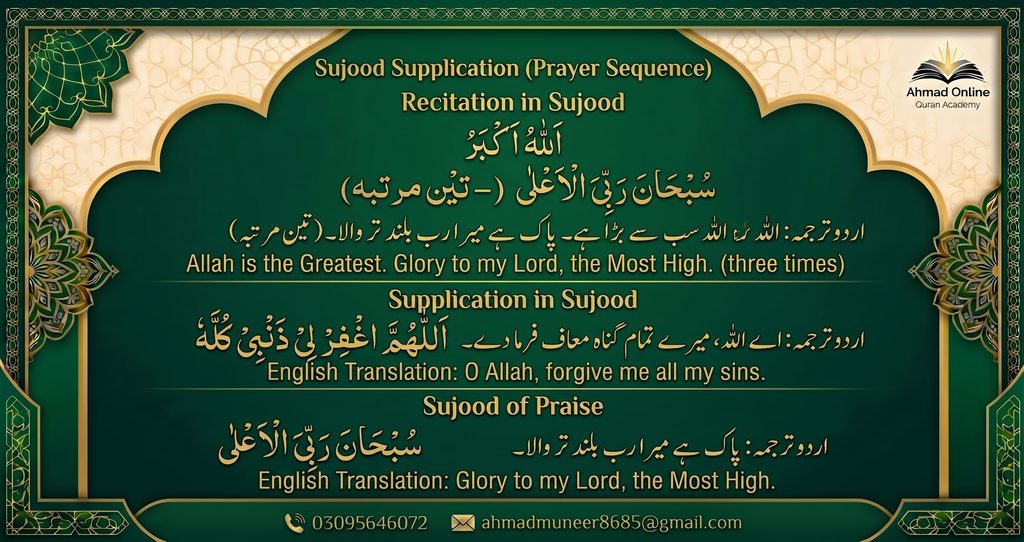
After the first Sujood, the worshipper sits briefly in the position known as Jalsah and recites a supplication asking Allah for forgiveness. After this, the worshipper says “Allahu Akbar” and performs the second Sujood.
8. Attahiyat — Tashahhud in Namaz Online USA
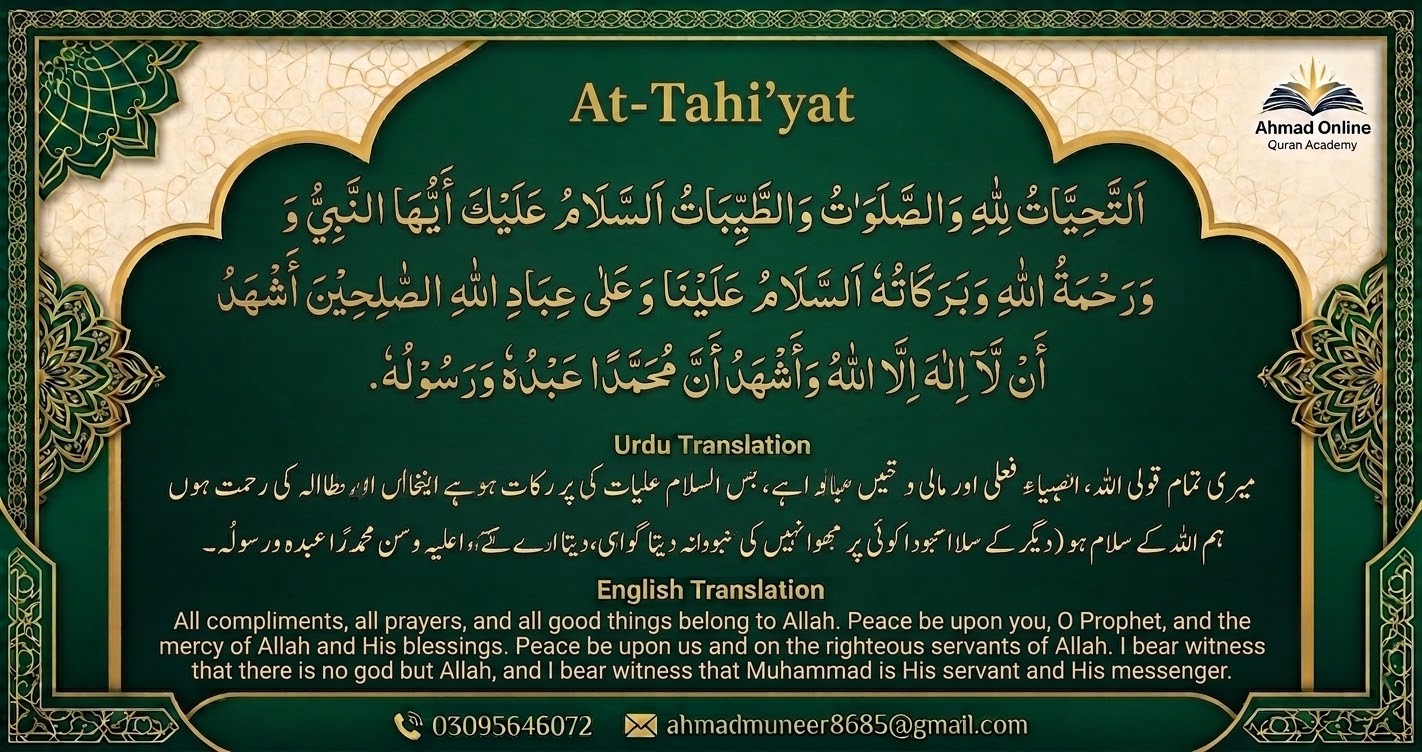
After completing the required Rak’ahs, the worshipper sits and recites Attahiyat (Tashahhud). It is an important supplication recited while sitting in Salah. In Attahiyat, we send greetings, praise, and blessings to Allah and bear witness to His oneness.
Learning Attahiyat with its meaning helps children and beginners understand what they are reciting during Namaz and makes their prayer more meaningful.
Attahiyat in Arabic
التَّحِيَّاتُ لِلَّهِ وَالصَّلَوَاتُ وَالطَّيِّبَاتُ، السَّلَامُ عَلَيْكَ أَيُّهَا النَّبِيُّ وَرَحْمَةُ اللَّهِ وَبَرَكَاتُهُ، السَّلَامُ عَلَيْنَا وَعَلَىٰ عِبَادِ اللَّهِ الصَّالِحِينَ، أَشْهَدُ أَنْ لَا إِلٰهَ إِلَّا اللَّهُ، وَأَشْهَدُ أَنَّ مُحَمَّدًا عَبْدُهُ وَرَسُولُهُ۔
English Translation
“All greetings, prayers, and pure words are for Allah. Peace be upon you, O Prophet, and the mercy of Allah and His blessings. Peace be upon us and upon all the righteous servants of Allah. I bear witness that there is no deity except Allah, and I bear witness that Muhammad is His servant and Messenger.”
Meaning of Attahiyat
Attahiyat expresses praise and devotion to Allah and includes the testimony of faith. It also contains greetings of peace for Prophet Muhammad ﷺ and for the righteous servants of Allah.
For students learning Namaz Online USA, memorizing Attahiyat along with its meaning can help them understand and perform Salah with greater awareness and concentration.
9. Durood Ibrahim — Blessings Upon Prophet Muhammad ﷺ
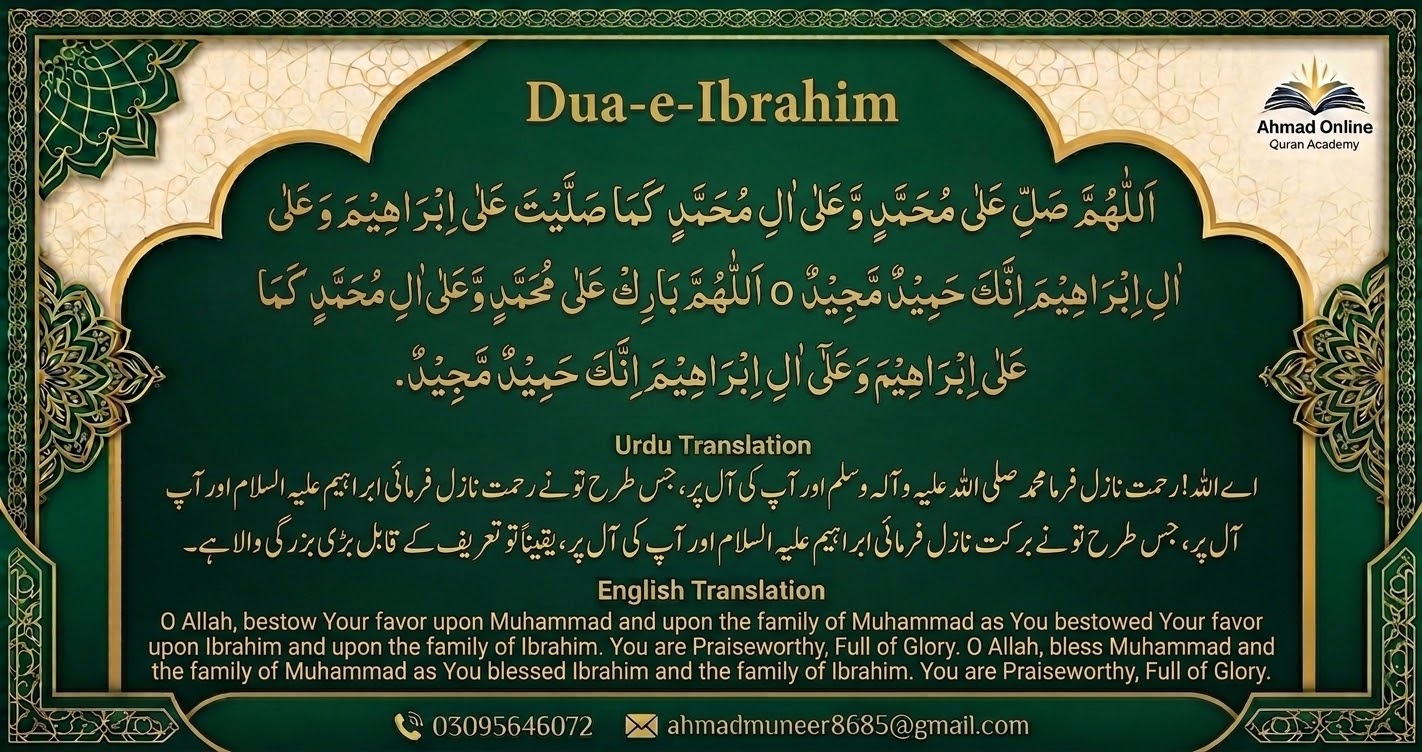
After reciting Attahiyat (Tashahhud) in the final sitting of Namaz, Durood Ibrahim is recited. In this beautiful supplication, we ask Allah to send His blessings and mercy upon Prophet Muhammad ﷺ and his family, just as He blessed Prophet Ibrahim عليه السلام and his family.
Durood Ibrahim in Arabic
اللَّهُمَّ صَلِّ عَلَىٰ مُحَمَّدٍ وَعَلَىٰ آلِ مُحَمَّدٍ، كَمَا صَلَّيْتَ عَلَىٰ إِبْرَاهِيمَ وَعَلَىٰ آلِ إِبْرَاهِيمَ، إِنَّكَ حَمِيدٌ مَجِيدٌ
اللَّهُمَّ بَارِكْ عَلَىٰ مُحَمَّدٍ وَعَلَىٰ آلِ مُحَمَّدٍ، كَمَا بَارَكْتَ عَلَىٰ إِبْرَاهِيمَ وَعَلَىٰ آلِ إِبْرَاهِيمَ، إِنَّكَ حَمِيدٌ مَجِيدٌ
English Translation
“O Allah, send blessings upon Muhammad and upon the family of Muhammad, as You sent blessings upon Ibrahim and upon the family of Ibrahim. Indeed, You are Praiseworthy and Glorious.
O Allah, bless Muhammad and the family of Muhammad, as You blessed Ibrahim and the family of Ibrahim. Indeed, You are Praiseworthy and Glorious.”
Meaning of Durood Ibrahim
Durood Ibrahim is a beautiful prayer of blessings upon Prophet Muhammad ﷺ and his family. It reminds Muslims of the importance of sending blessings upon the Prophet ﷺ during Salah and expressing love and respect for him.
Final Dua Before Salam
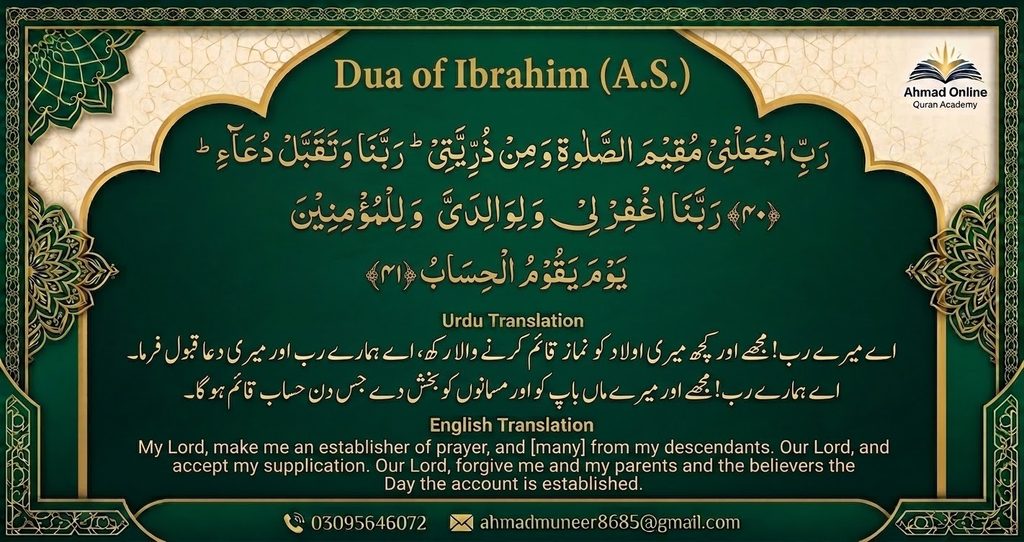
After reciting Durood Ibrahim in the final sitting of Salah, a Muslim may make Dua before ending the prayer with Salam. One beautiful Quranic supplication is the Dua of Prophet Ibrahim (Abraham) عليه السلام, in which he asks Allah to help him and his descendants establish prayer and asks for forgiveness for himself, his parents, and the believers.
Complete Arabic Dua
رَبِّ اجْعَلْنِي مُقِيمَ الصَّلَاةِ وَمِنْ ذُرِّيَّتِي ۚ رَبَّنَا وَتَقَبَّلْ دُعَاءِ ٤٠
رَبَّنَا اغْفِرْ لِي وَلِوَالِدَيَّ وَلِلْمُؤْمِنِينَ يَوْمَ يَقُومُ الْحِسَابُ ٤١
English Translation
“My Lord, make me an establisher of prayer, and [many] from my descendants. Our Lord, and accept my supplication.
Our Lord, forgive me, my parents, and the believers on the Day the judgment will come to pass.”
Meaning and Importance
This beautiful Dua reminds Muslims of the importance of establishing Salah and asking Allah to accept their worship. It also includes a prayer for forgiveness for oneself, one’s parents, and all believers.
For a Namaz Online USA guide, this Dua is a meaningful way to conclude the supplications before ending Salah.
Insert Final Dua Image Here
Image Alt Text: Rabbi Aj’alni Muqeemas-Salah Final Dua in Namaz Online USA
Ending the Prayer with Salam
After completing the final Dua, the prayer is concluded with Salam by turning the face to the right and then to the left.
Arabic
السَّلَامُ عَلَيْكُمْ وَرَحْمَةُ اللَّهِ
English Translation
“Peace and the mercy of Allah be upon you.”