
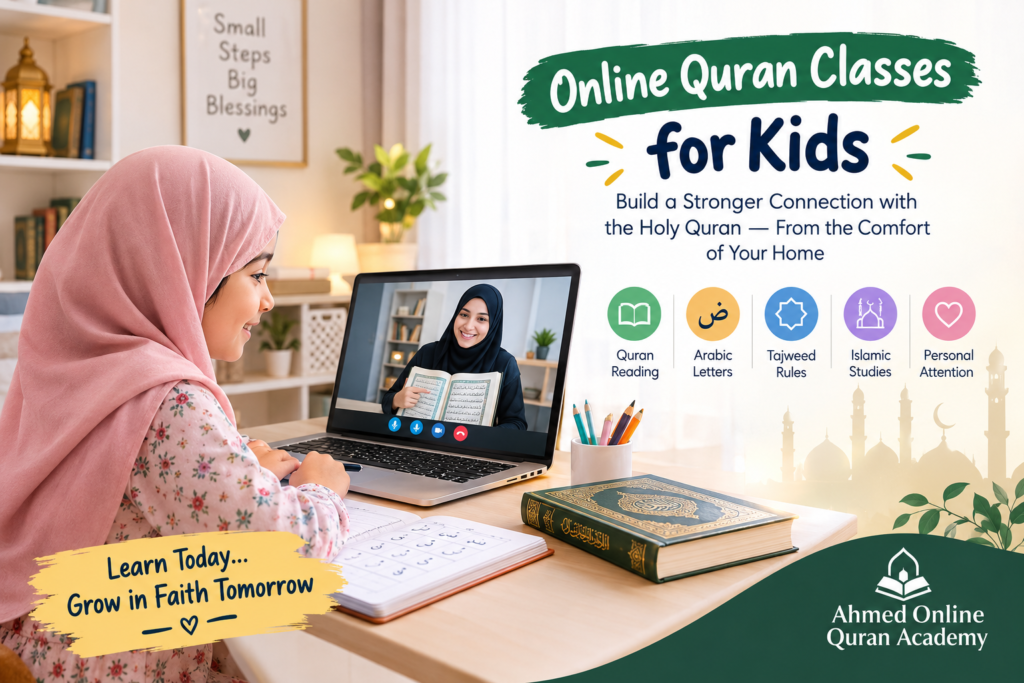
Every Muslim parent wants their child to grow up with a strong connection to the Holy Quran. Learning to read the Quran correctly from an early age helps children develop Islamic knowledge, good habits, and a lifelong appreciation for their faith. However, busy school schedules, family responsibilities, and limited access to suitable local teachers can make regular Quran lessons challenging.
This is where online Quran classes for kids can make a difference. Through live online lessons, children can learn Quran reading, Arabic letters, pronunciation, Tajweed, and essential Islamic teachings from the comfort of home.
Online Quran classes for kids: With the right teacher, a structured learning plan, and consistent practice, online Quran education can become a positive part of your child’s daily routine.
In this guide, we will explore the benefits of Online Quran classes for kids, what children can learn, how parents can choose a suitable academy, and how to help children succeed in their Quran learning journey.
What Are Online Quran Classes for Kids?
Online Quran classes for kids are lessons conducted online with a Quran teacher. Children can attend classes using a computer, laptop, tablet, or smartphone with a stable internet connection.
Depending on their age and current ability, children may begin by learning Arabic letters and their sounds before progressing to Quran reading, pronunciation, and Tajweed rules.
Many Online Quran classes for kids programs are designed for beginners, while others support children who already know how to read Arabic and want to improve their recitation.
Parents can explore online learning options through Ahmed Online Quran Academy to learn more about Quran education for their children.
Why Choose Online Quran Classes for Kids?
Choosing the right learning environment is important for a child’s progress. Online Quran classes offer several practical benefits for modern Muslim families.
1. Learn the Quran From Home
One of the biggest advantages of Online Quran classes for kids is convenience. Children do not need to travel to a mosque or a physical learning centre for every lesson.
They can attend classes from a quiet space at home, making Quran learning easier to manage alongside school, homework, and other activities.
This option can be particularly useful for Muslim families living in the USA, UK, Canada, Australia, and other countries where finding a suitable local Quran teacher may be challenging.
2. Flexible Class Schedules
Children often have busy daily routines that include school, homework, sports, and family activities. A flexible online schedule can help parents find a suitable time for Quran lessons.
3. Individual Attention From a Teacher
Children learn at different speeds. Some quickly recognize Arabic letters, while others need additional time to understand letter sounds and pronunciation.
Personal attention can help teachers identify a child’s strengths and areas for improvement. Teachers can listen to recitation, correct mistakes, explain difficult concepts, and encourage students to practise regularly.
4. Learn Correct Quran Pronunciation
Correct pronunciation is an important part of learning to read the Holy Quran. Children need opportunities to listen carefully, repeat sounds, and receive guidance when they make mistakes.
A qualified Quran teacher can help children recognize Arabic letters, understand their sounds, and gradually improve their recitation
5. A Comfortable Learning Environment
Some children feel shy when learning in a new classroom or reading aloud in front of other students. Learning from home may help them feel more comfortable asking questions and practising difficult lessons.
Parents can support this process by providing a quiet study area, encouraging children to participate, and praising their efforts
What Can Children Learn in Online Quran classes for kids?
The best learning plan depends on the child’s age, previous experience, and learning goals. A well-organized Quran course may cover the following areas.
1. Arabic Alphabet and Noorani Qaida
Beginners usually start by recognizing Arabic letters and learning their correct sounds. They gradually practise connecting letters, identifying vowel marks, and reading simple combinations.
2. Quran Reading (Nazra Quran)
After learning the basics, children can begin reading the Holy Quran directly. Their teacher can guide them through words, verses, and passages while helping them improve fluency and accuracy.
3. Quran With Tajweed
Tajweed refers to the rules that guide the correct pronunciation and recitation of the Quran.
Children can gradually learn important Tajweed concepts, including the characteristics of Arabic letters, appropriate elongation, and rules related to noon sakinah and tanween.
4. Quran Memorization (Hifz)
Progress depends on the child’s age, available time, learning ability, and consistency. Parents should focus on correct recitation, understanding, and steady progress instead of putting unnecessary pressure on children.
5. Basic Islamic Studies
In addition to Quran reading, children may benefit from age-appropriate Islamic education.
Depending on the course offered, this can include daily duas, Islamic manners, basic beliefs, stories of the Prophets, and lessons about kindness, honesty, respect, and responsibility.
How to Choose the Best Online Quran Classes for Kids
Not every online Quran program will suit every child. Before enrolling, consider these important factors.
Qualified and patient teachers: Look for teachers with suitable Quran teaching knowledge who can explain concepts clearly and work well with children.
A structured curriculum: Ask whether the academy offers a clear learning path, from Arabic letters and basic reading to more advanced Quran study.
Class format: Determine whether private or group lessons are available and which option best matches your child’s needs.
Suitable timings: Check that class times work with your family’s schedule and local time zone.
Progress updates: Regular feedback can help parents understand what their child has learned and what needs further practice.
A safe learning environment: Ask about teacher communication, class supervision, privacy practices, and the arrangements available for younger learners.
A suitable budget: Compare course fees, lesson duration, teaching format, and included services before making a decision.
Tips to Help Your Child Succeed in Online Quran Learning
Parents play an important role in making Quran education successful. Even a short daily routine can help children become more comfortable with what they learn.
- Create a regular schedule: Choose a suitable time when your child is alert and less likely to be distracted.
- Prepare a quiet study space: Keep the device, internet connection, and learning materials ready before class.
- Encourage daily practice: A few minutes of revision can reinforce lessons between classes.
- Celebrate small achievements: Praise your child for improved pronunciation, completing a lesson, or remembering a new rule.
- Stay connected with the teacher: Ask about progress and follow any recommended revision plan.
- Keep learning enjoyable: Avoid comparing your child with others or expecting every lesson to produce immediate results.
- Balance learning and rest: Give children enough time for school, play, sleep, and family activities.
Are Online Quran classes for kids Suitable for Beginners?
Yes. Online Quran classes for kids can be suitable for children who are starting from the beginning, provided the lessons are designed for their learning level.
A beginner may start by recognizing Arabic letters, practising their sounds, and learning basic vowel marks. As these skills improve, the child can progress to connecting letters, reading words, and eventually practising Quranic verses.
Parents should tell the teacher if their child has never studied Arabic or Quran reading before. This helps the teacher choose an appropriate starting point.
Why Start Your Child’s Quran Learning Journey Today?
Introducing children to the Quran early can help establish a meaningful learning habit that continues as they grow. Learning to read the Quran, improve recitation, and understand basic Islamic teachings can become an important part of their personal and spiritual development.
Online Quran classes for kids provide families another way to make these lessons accessible, even when daily schedules or geographical distance create challenges.
The key is to find a suitable teacher, choose a realistic schedule, and give children the encouragement they need to keep learning.
At Ahmed Online Quran Academy, parents can explore Quran learning opportunities and take the next step toward supporting their child’s Islamic education.
Visit Ahmed Online Quran Academy to learn more and explore the available learning options for your family.
Frequently Asked Questions (FAQs)
What is the best age to start online Quran classes for kids?
Children can begin learning Arabic letters and basic Quran concepts when they are ready to participate in simple lessons. The ideal starting age varies depending on attention span, interest, and learning ability.
How long does it take a child to learn Quran reading?
The time required varies from child to child. Previous experience, lesson frequency, practice, and individual learning ability all affect progress. Regular lessons and revision can help children build their skills gradually.
Can beginners join online Quran classes?
Yes. Beginner-friendly courses can introduce children to Arabic letters, pronunciation, vowel marks, and basic reading skills before progressing to Quran recitation.
What equipment does my child need for Online Quran classes for kids?
Usually, a computer, laptop, tablet, or smartphone with a stable internet connection is sufficient. A quiet study space, headphones if needed, and the appropriate video-calling platform can also help.
How do I enrol my child in Online Quran classes for kids
Visit the Ahmed Online Quran Academy website to explore the available options and contact the academy for information about courses, timings, fees, and enrolment.